
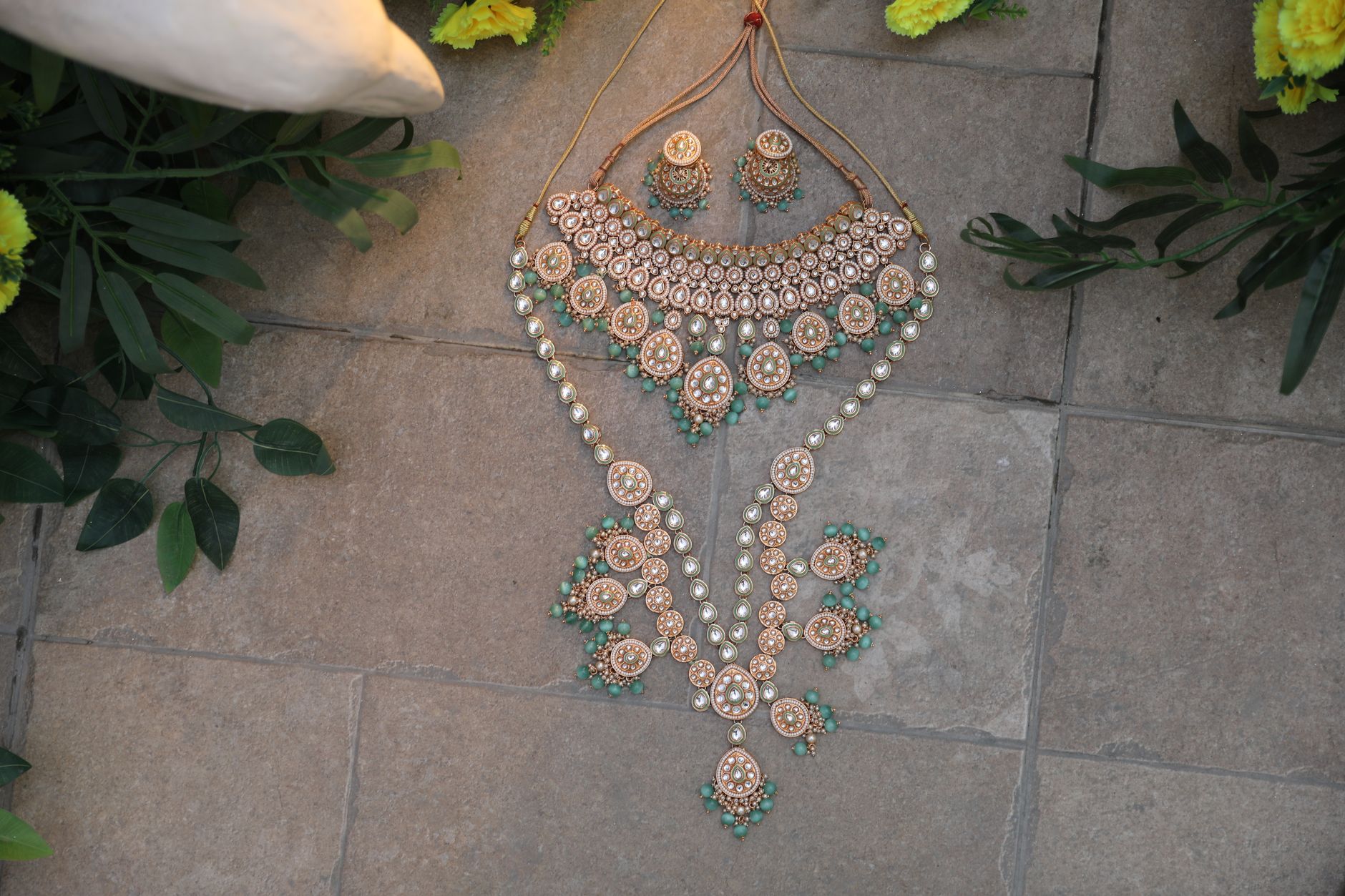
Polki jewelry is jewelry made with uncut diamonds set in gold. It looks different because each stone keeps its natural shape and sits in a fitted gold cup that gives a soft glow instead of sharp sparkle. That setting suits readers who like textured, traditional luxury pieces. It also affects value, care, and everyday wear, so it helps to know what you are buying.
Table of Contents
- How the polki setting works
- How is polki different from faceted diamonds and kundan?
- What should you check before you buy?
- When does polki suit your wardrobe and care routine?
How the polki setting works
A polki diamond is a diamond in its rough, uncut or lightly polished form. The cutter preserves the natural crystal shape instead of cutting flat facets for maximum fire. The setter places each stone in a small cup of gold, often lined with foil.
The foil sits behind the stone and reflects light back through its uneven surface. This structure is called a closed-back setting. The back is sealed, so you see gold rather than open stone when you turn the piece over.
How is polki different from faceted diamonds and kundan?
A modern faceted diamond is cut for brilliance, with precise angles that throw back white and colored light. A polki stone gives a broader, warmer gleam with less sharp flash. Kundan and polki are often sold together, but they are not the same.
Kundan commonly uses glass or stones set in refined gold, while polki specifically means the central stones are uncut diamonds. Ask which parts are polki diamond and which are kundan, enamel, or accent stones. Many pieces mix materials in one design.
- Faceted diamond: bright, uniform sparkle; open or prong setting shows the stone.
- Polki diamond: soft, varied glow; closed gold cup supports the stone.
- Kundan: similar gold work, but the insets may be glass or other stones.
What should you check before you buy?
Look closely at fit and finish. Each uncut stone should sit level, with smooth gold edges and no gaps, wobble, or sharp foil showing around the rim. Check the reverse and fastenings.
Closed backs add weight, so hinges, hooks, and earring posts should feel secure and comfortable for longer wear. Buy from a jeweler who explains the setting method and provides clear documentation. Vague labels like diamond-style or real-cut make later resale and repair harder.
- Confirm uncut diamonds versus glass, crystal, or synthetic accents in writing.
- Confirm gold purity, total weight, and whether stones are included in that weight.
- Ask about treatments, foil replacement, and repair options for loose stones.
- Try the size and weight, especially for chokers, chandbali earrings, and bangles.
When does polki suit your wardrobe and care routine?
Polki works well for weddings, evening events, and statement pieces. Its warm glow pairs naturally with gold, silk, velvet, and rich color. It is less suited to hard daily wear.
Closed backs can trap moisture, perfume, and sweat, and foil can dull if soaked or scrubbed. Wipe pieces with a soft, dry cloth after wearing and store them flat in a lined box. Keep bangles, rings, and bracelets away from knocks, sports, cleaning, and swimming.