
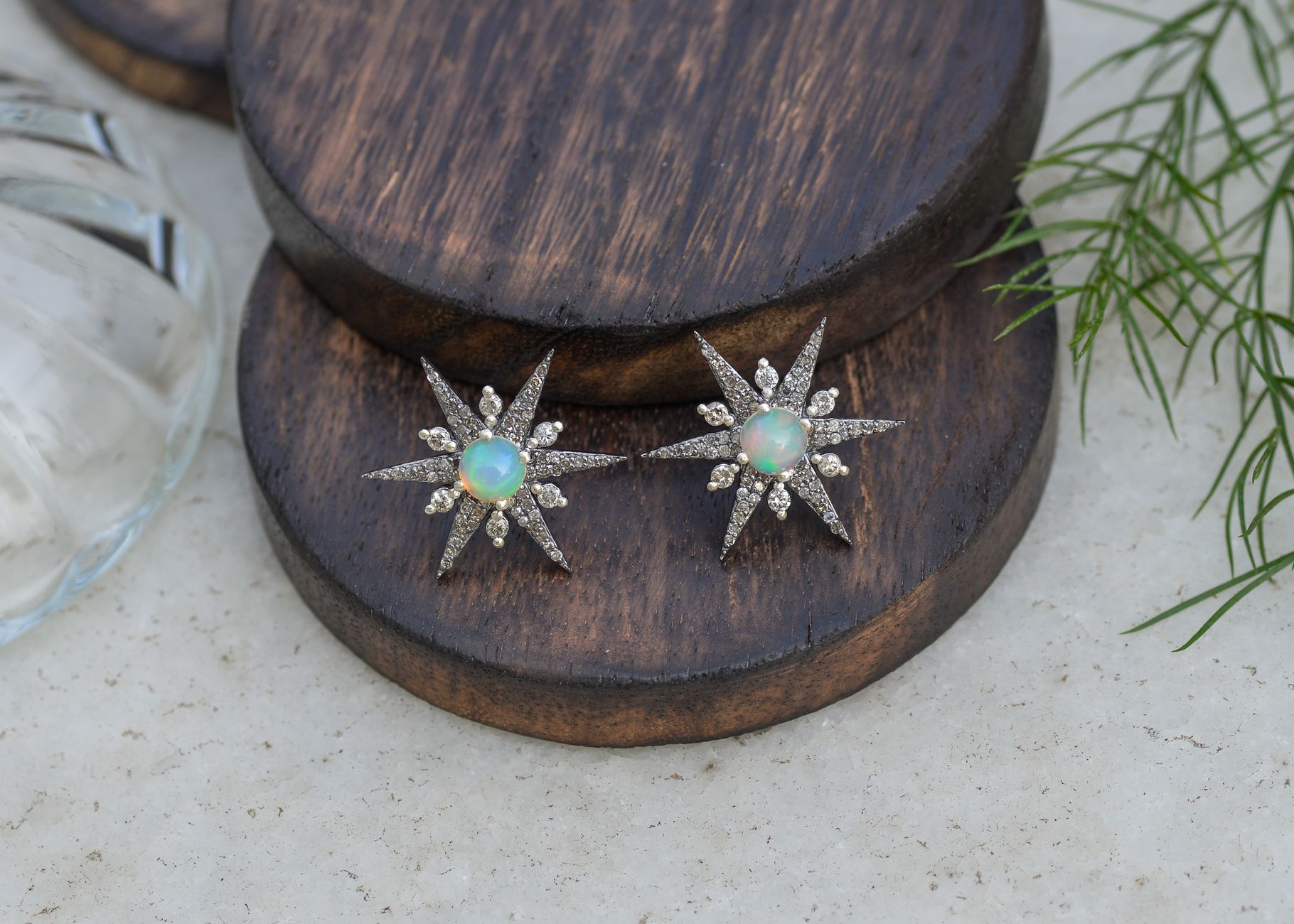
No, opals are not bad luck. Opal, the gem known for shifting flashes of color, owes the warning to folklore, not to any quality in the stone. It has long stood for hope, imagination, and affection. Shoppers today choose it for beauty and personal meaning.
Table of Contents
- Where Did the Bad-Luck Story Come From?
- What Do People Believe About Opals Now?
- Why Does Opal Need Careful Wear?
- Should You Choose Opal Jewelry?
Where Did the Bad-Luck Story Come From?
Opal once held a favored place in fine jewelry. Its standing slipped when changing fashion and mistrust of its shifting color made it seem unstable. A dramatic story in popular fiction gave the stone an unlucky role.
Readers repeated the idea, and rival sellers had little reason to correct it. The tale stuck because opal can crack if mishandled. People mistook breakage for a curse rather than a care problem.
What Do People Believe About Opals Now?
Many wearers link opal with creativity, warmth, and good fortune. It serves as the October birthstone and as a distinctive choice for rings, earrings, and pendants. Old warnings survive mainly as family sayings.
Most buyers treat them like other jewelry folklore and follow taste instead. White opal glows soft against yellow gold. Black opal shows bright color against dark body tone, while fire opal shows warm body color with less shifting flash.
Why Does Opal Need Careful Wear?
Opal is softer than sapphire, ruby, and diamond. A hard knock, scratch, or squeeze in a thin prong can chip an edge or crack the face. The stone also holds water in its structure.
Strong heat, long dry storage, and harsh chemicals can dry the surface and dull the look. Solid opal is one piece of natural material throughout. A doublet or triplet joins a thin opal layer to a backing, sometimes with a clear top, which needs gentler wear and repair.
Should You Choose Opal Jewelry?
Opal suits buyers who want color with character and accept mindful care. It fits earrings and pendants best, where knocks are rare.
A trusted jeweler will explain the setting, the type of opal, and the service plan. Ask for cleaning and inspection guidance before you leave the store.
- Choose a low, protective setting with a solid seat and covered edges.
- Ask whether the stone is solid, doublet, or triplet, and how that affects cleaning and repair.
- Save opal rings for office days and events, not for sports, gardening, or heavy work.
- Clean with lukewarm water, mild soap, and a soft cloth, then dry fully before storage.