
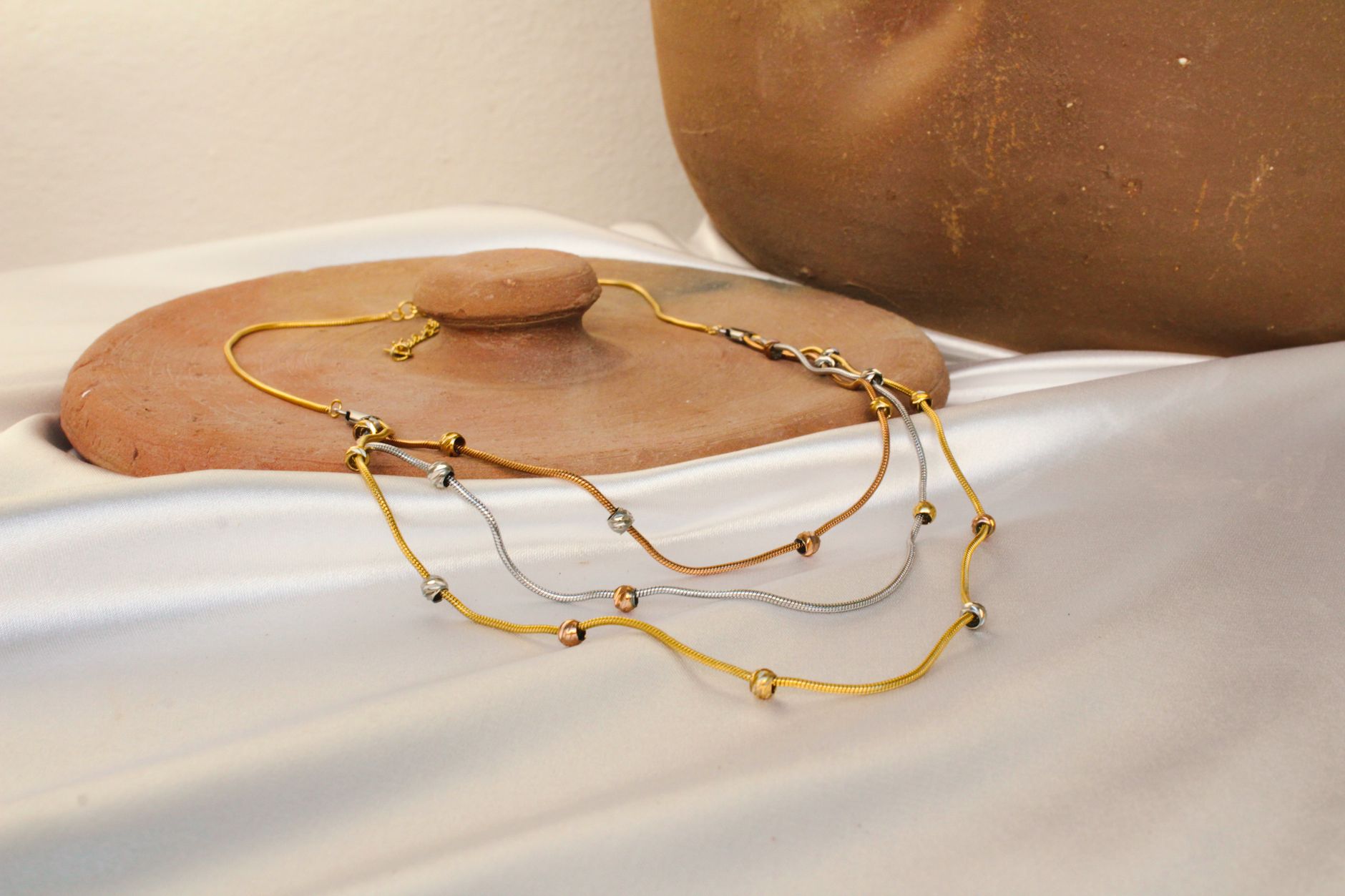
Mixed-metal jewelry pairing means wearing gold and silver pieces together on purpose, rather than keeping each metal in its own separate collection. The combination works when a piece of jewelry — or the metal tones within an outfit — repeats enough gold and silver in a balanced way that it looks deliberate rather than mismatched. Jewelers have moved away from the old rule that gold and silver must never touch. Today's layering and stacking trends, along with two-tone watches and rings that have been standard for decades, treat the pairing as a style choice rather than a mistake to avoid.
Table of Contents
- Why Gold and Silver Work Together
- Where to Start if You're New to Mixing Metals
- Matching Metals to Skin Tone and Occasion
- Caring for Mixed-Metal Pieces
- Common Mistakes That Undermine the Look
- Frequently Asked Questions
Why Gold and Silver Work Together
Gold and silver are both neutral metals in the sense that they don't clash with skin tone the way a loud color might. Gold carries a warm cast, from the yellow of 24k down to the pink of rose gold, while silver and white gold carry a cool, blue-grey cast. Because both are neutral rather than competing colors, they read as complementary rather than contradictory once enough of each is present to look intentional.
Two-tone jewelry has existed for a long time precisely because of this. Watches, wedding bands, and bangles have combined gold and silver (or gold and platinum) tones for decades, which is one reason the pairing already feels familiar even to people who have never tried it on purpose. The main risk is not clashing metals but an unbalanced ratio — one lonely silver ring among five gold pieces reads as an accident, not a style. The fix is to make the combination clearly repeated: at least two pieces of each metal, or one mixed-metal piece that does the work for you.
Where to Start if You're New to Mixing Metals
The easiest entry point is a single mixed-metal piece rather than assembling an outfit of pure gold and pure silver items. A two-tone ring, a necklace with a gold chain and silver pendant, or a bracelet that alternates links of each metal does the blending for you and removes the guesswork. Layered necklaces and stacked rings are forgiving formats for this because multiple thin pieces naturally create the repetition that makes mixing look planned.
- Start with one mixed-metal piece (ring, bracelet, or necklace) before combining separate gold-only and silver-only items.
- Keep a consistent finish across both metals — matte with matte, polished with polished — so the difference in tone doesn't also become a difference in texture.
- Anchor the look with one dominant metal (say, 70% gold, 30% silver) rather than aiming for an exact 50/50 split, which is harder to balance visually.
- Repeat each metal at least twice if mixing separate pieces, so the pairing reads as a choice.
Matching Metals to Skin Tone and Occasion
Jewelers commonly describe skin tone in terms of warm, cool, and neutral undertones, and this affects how gold or silver reads against it — not whether the two metals can be worn together. Warm undertones (skin that tans easily, with gold or olive casts) tend to make yellow and rose gold look especially harmonious. Cool undertones (skin that burns more easily, with pink or blue casts) tend to flatter silver, white gold, and platinum. Mixing metals sidesteps the undertone debate entirely, since wearing both means you're no longer choosing one over the other.
This is part of why the trend has held: it works for any skin tone rather than requiring a person to identify their undertone first. For occasions, the same balance principle applies at a different scale. A gold statement necklace with small silver stud earrings works for daytime or office settings because the silver stays understated. For evening wear, equal-weight pieces — a gold cuff and a silver cuff on opposite wrists, for instance — read as a bolder, more fashion-forward choice.
Caring for Mixed-Metal Pieces
Gold and silver require different care, and this matters more once they're worn together regularly. Sterling silver tarnishes with air exposure and needs periodic polishing with a silver cloth or mild polish; gold does not tarnish but can scratch and should be cleaned with mild soap and warm water. A piece described as gold-plated or silver-plated needs gentler handling than solid gold or sterling silver, since the plating can wear through with frequent contact against another metal.
- Store gold and silver pieces separately, since silver can leave marks on softer gold surfaces when they rub together in a jewelry box.
- Remove mixed-metal jewelry before swimming, showering, or applying lotion, since chlorine and some chemicals dull both metals, but tarnish silver faster than it dulls gold.
- Check clasps and connecting points on two-tone pieces regularly, since different metals can wear at different rates where they're soldered or linked together.
- Avoid storing silver in plastic bags long-term, since trapped moisture accelerates tarnish; a soft cloth pouch is better for pieces that mix metals.
Common Mistakes That Undermine the Look
The most frequent mistake is mixing metals without any repetition — a single silver bracelet worn with four gold rings and gold earrings looks like an oversight rather than a style choice. Repetition is what signals intent. A second mistake is mixing finishes along with metals: a high-polish gold piece next to a brushed or matte silver piece creates two points of contrast instead of one, which can look busier than intended.
Keeping the finish consistent (both polished, or both matte) isolates the metal-tone contrast as the only variable. A third mistake is ignoring proportion in statement pieces. A large gold statement ring paired with an equally large silver statement necklace competes for attention; letting one metal lead as the focal point and the other support it in smaller pieces (studs, thin bands, delicate chains) keeps the eye moving naturally rather than torn between two focal points.
Frequently Asked Questions
Do gold and silver jewelry pieces damage each other if worn together?
Worn together, no damage occurs from the metals touching briefly, but storing them touching in a jewelry box can let silver mark softer gold over time, so separate storage is the main precaution.
Is there a "correct" ratio for mixing gold and silver?
There's no fixed rule, but a dominant metal at roughly 60-70% with the second metal in a supporting role is generally easier to balance than an even split.
Can white gold be mixed with yellow gold and silver at the same time?
Yes — white gold reads close to silver in tone, so combining all three generally works as a two-tone look (warm yellow/rose gold against cool white gold/silver) rather than a three-way clash.