
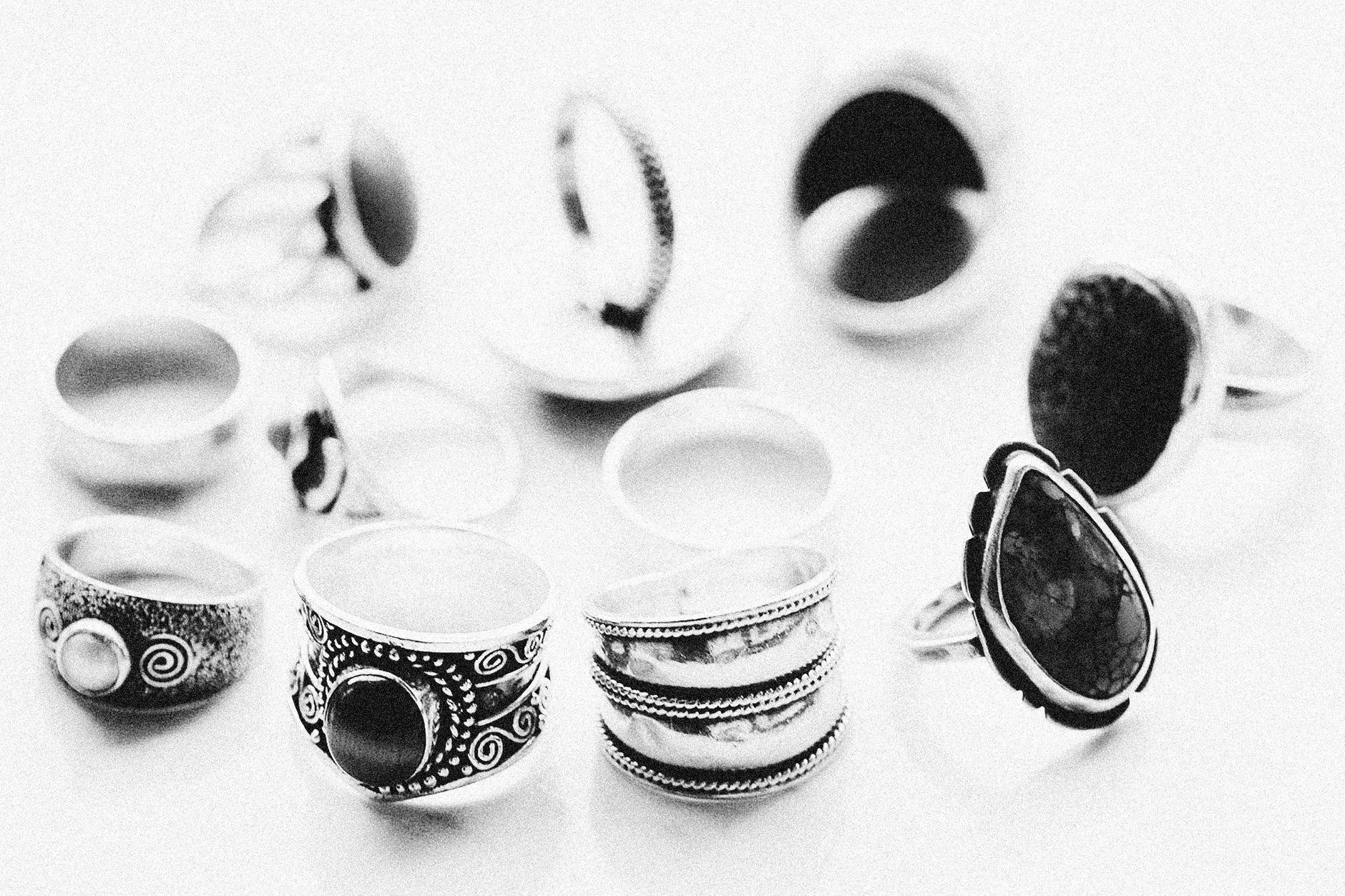
A genuine black obsidian necklace is made from natural volcanic glass, formed when lava cools too quickly for mineral crystals to develop. A buyer can check for this by examining the stone's conchoidal fracture pattern, its glassy luster, its weight-to-size ratio, and how it reacts to a flame test or jeweler's loupe, since synthetic glass and dyed quartz imitations fail these checks in consistent, predictable ways. Obsidian sits in an unusual spot in the jewelry market: it has genuine geological value but a low material cost, so most fakes exist not to mimic a precious gem but to pass off ordinary glass as the real, naturally formed stone. Knowing what distinguishes volcanic glass from manufactured glass lets a buyer confirm they're paying for the right material before a purchase.
Table of Contents
- What Black Obsidian Actually Is
- The Fracture and Edge Test
- Weight, Temperature, and the Flame Test
- Reading the Seller's Description and Price
- Frequently Asked Questions
What Black Obsidian Actually Is
Obsidian forms when silica-rich lava cools so rapidly that atoms don't have time to arrange into the ordered lattice of a crystal. The result is an amorphous solid, chemically closer to glass than to a mineral like quartz, even though it occurs naturally. Its black color comes from trace iron and magnesium content, which also explains why some obsidian pieces show a sheen or color shift under light. Because obsidian is technically a glass, it shares properties with man-made glass: both break with a smooth, curved fracture and both can be shaped into beads or pendants. This overlap is exactly why imitation is common and why visual inspection alone isn't always conclusive.
A buyer needs to know which specific traits separate the volcanic version from the manufactured one. Two obsidian varieties are worth knowing by name, since sellers sometimes use them to justify higher prices. Rainbow obsidian shows iridescent bands when tilted in light, caused by microscopic gas bubble layers. Snowflake obsidian has pale gray mineral clusters (cristobalite) scattered through the black glass. Plain black obsidian has neither effect, so a "black obsidian" piece showing rainbow flashes or snowflake patterns is being misdescribed, not upgraded.
The Fracture and Edge Test
Obsidian breaks with a conchoidal fracture: a smooth, curved surface resembling the inside of a shell, with no flat planes or grain lines. This is the same fracture pattern seen in flint and in manufactured glass, so it confirms the material is a glass of some kind, but it doesn't by itself prove the piece is natural. Still, its absence is a red flag.
A bead or pendant that shows flat facets with sharp geometric edges, rather than any curved breakage, was likely cut or molded from a different material entirely. A more useful check is the edge of an unpolished or chipped area, if the necklace has one. Natural obsidian edges can be sharp enough to cut skin lightly, a property so pronounced that obsidian was historically knapped into blades and arrowheads. Cast glass imitations are usually molded as smooth, rounded beads with no genuinely sharp edges anywhere, because mass production avoids the hazard and the extra shaping step.
- Look for curved, shell-like breakage rather than flat cleavage planes.
- Check any rough or unpolished spot for a glassy, almost wet-looking shine.
- Avoid pieces that look uniformly smooth and rounded with zero sharp facets, since that uniformity is typical of cast imitation glass, not a stone shaped from natural obsidian.
Weight, Temperature, and the Flame Test
Obsidian has a specific gravity of roughly 2.3 to 2.6, close to ordinary soda-lime glass, so weight alone won't distinguish it from a glass fake of the same size. It will, however, feel distinctly heavier than plastic or resin beads of the same dimensions, which run much lighter. If a "black obsidian" necklace feels notably light for its bead size, plastic is a likely culprit. Temperature response is a more reliable at-home check. Obsidian is a poor conductor of heat, so a genuine bead held in the hand stays cool to the touch for longer than a plastic or resin bead, which warms quickly from body heat.
This isn't a lab-grade test, but it's a fast way to rule out plastic imitations sold as "obsidian" in costume jewelry. A flame test is more diagnostic but should only be used on a loose bead, never on a finished necklace a buyer doesn't own, since it risks damage. Natural obsidian resists a lighter flame without melting, charring, or releasing a strong chemical odor, because it's already a cooled volcanic glass with a very high original formation temperature. Plastic imitations soften, melt, or emit an acrid smell almost immediately under the same flame. A seller offering a loose sample bead for this kind of check is signaling confidence in their material.
Reading the Seller's Description and Price
Natural black obsidian is inexpensive as raw material, so pricing is a weak signal of authenticity on its own; the risk runs the other way, since a very low price can also apply to real obsidian because it's genuinely abundant. What matters more is whether the listing names the correct material and origin honestly. A reputable seller will state plainly whether the piece is natural obsidian, obsidian glass, or a dyed/synthetic imitation, often sourced from known obsidian regions such as Mexico, Oreg, Armenia, or Iceland.
Vague language is the clearer warning sign. Listings that describe a piece only as "volcanic glass" without the word "natural," or that pair "obsidian" with unrelated marketing claims about healing properties and energy without any material description, are more likely to be glossing over a synthetic substitute. Buyers should also treat the word "obsidianite" or "obsidian glass" with caution, since these terms sometimes describe deliberately manufactured black glass rather than a geological sample, even when marketed alongside genuine stone pieces.
- Ask the seller directly whether the material is natural obsidian or man-made glass; a straight answer with sourcing information is a good sign.
- Compare bead weight and feel against a known reference piece if one is available, such as a loose stone at a rock and mineral shop.
- Request a close-up photo of an unpolished or drilled section, where the glassy luster and curved fracture are easiest to see.
- Be skeptical of claims that any form of obsidian changes color with mood or energy; obsidian's only established light-based color effects are the fixed iridescence of rainbow obsidian and the fixed mineral spotting of snowflake obsidian.
Frequently Asked Questions
Can a jeweler's loupe alone confirm obsidian?
A loupe helps spot the glassy luster and curved fracture lines, but it can't distinguish natural obsidian from cast black glass, since both share the same amorphous structure under magnification; it's best used alongside the temperature and flame checks.
Does black obsidian scratch easily?
Obsidian measures about 5 to 5.5 on the Mohs hardness scale, similar to window glass, so it scratches more easily than quartz or most gemstones; visible fine scratches on an older piece are consistent with genuine obsidian rather than evidence against it.
Is dyed black onyx sometimes sold as obsidian?
Yes; black onyx is a banded chalcedony that's often dyed solid black and can resemble polished obsidian beads, but onyx is a crystalline mineral, so it lacks obsidian's glassy conchoidal fracture and shows a duller, waxier shine instead.