
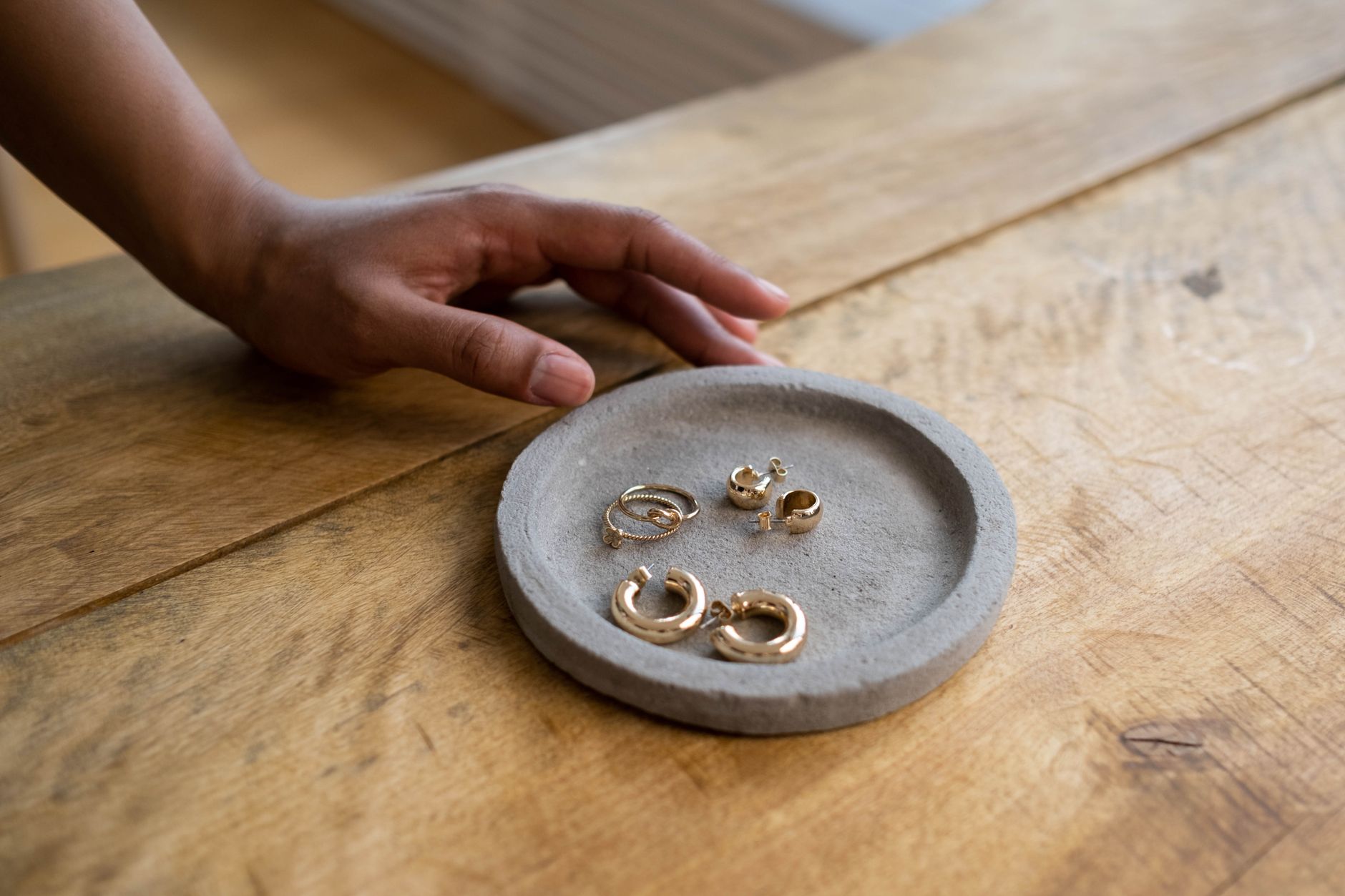
A gold-plated copper ring has a copper base covered by a thin layer of gold. Its value and wear life depend mainly on the plating thickness, construction, and truthful labeling—not the gold color alone. The ring is not solid gold, and its gold layer usually contributes little recoverable metal value. Before buying, check the plating thickness in microns, the gold fineness, the base metal, and any maker or quality marks.
Table of Contents
- What does the copper base mean?
- How much does plating thickness matter?
- What do the marks actually tell you?
- How can you evaluate a ring before buying?
- Care, repair, and realistic value
What does the copper base mean?
Copper gives the ring structure while keeping material costs below those of solid gold. It is easy to shape and conducts heat well, but it can oxidize when exposed to air, moisture, sweat, and chemicals. Once the plating wears through, the exposed copper may darken or leave a temporary green stain on skin.
That discoloration comes from copper compounds and does not, by itself, prove the ring is counterfeit. Some rings include a barrier layer between the copper and gold. This layer can improve adhesion and slow copper migration, but sellers do not always disclose its composition. Anyone sensitive to nickel should ask whether nickel appears in the base, barrier layer, solder, or other components.
How much does plating thickness matter?
Plating thickness is normally expressed in microns, with one micron equal to one-thousandth of a millimeter. A gold color description such as "18K plated" identifies the finish's stated fineness, not how thick that finish is.
Very thin decorative plating can fade quickly on a ring because hands encounter friction, soap, sweat, and hard surfaces. A thicker coating generally lasts longer, but wear also depends on preparation, adhesion, barrier layers, and how the ring is used. Ask the seller for the minimum finished thickness rather than accepting terms such as "premium," "heavy," or "luxury plated." If no micron measurement is available, treat the expected lifespan as uncertain.
What do the marks actually tell you?
A mark such as "18K GP" usually means 18-karat gold plating over another metal. It does not mean the entire ring contains 75% gold, as an unqualified 18K mark would imply for a solid-gold item. Other abbreviations may describe specific coated products, but terminology and legal standards vary by market.
Common distinctions include: A "925" mark normally represents sterling silver, so it conflicts with a claim that the ring's base is copper. The discrepancy may reflect a plated component, an inaccurate listing, or a false mark and deserves clarification. Marks alone cannot authenticate a ring. Some legitimate plated pieces carry only a maker's mark, while misleading pieces may carry unauthorized fineness stamps.
- GP or GEP: gold plated or gold electroplated
- HGE: heavy gold electroplate
- RGP: rolled gold plate
- Gold filled: a bonded gold layer, not ordinary electroplating
- Vermeil: gold over sterling silver, not copper
How can you evaluate a ring before buying?
Start with the written product description and request missing specifications. A useful listing should identify the base metal, gold fineness, plating method, thickness, and any intermediate coating. Also examine high-friction areas such as the inner band, edges, prongs, and raised details.
Uneven color, exposed reddish metal, bubbling, peeling, or green residue suggests damage or poor adhesion. For an important purchase, ask an independent jeweler to inspect the ring. Testing must account for the coating because a surface-only reading can identify the gold finish without revealing the copper beneath it.
Care, repair, and realistic value
Remove the ring before swimming, bathing, exercising, cleaning, or applying lotion and fragrance. Wipe it with a soft, dry cloth and store it separately to reduce scratches and chemical exposure. Avoid abrasive polishing cloths, metal cleaners, and repeated hard rubbing.
These methods may brighten solid gold but can remove a plated ring's limited gold layer. A jeweler may be able to clean, prepare, and replate the piece after wear. Replating makes the most sense when the ring has sentimental or design value; a copper-based plated ring should not be priced or insured as solid gold.