
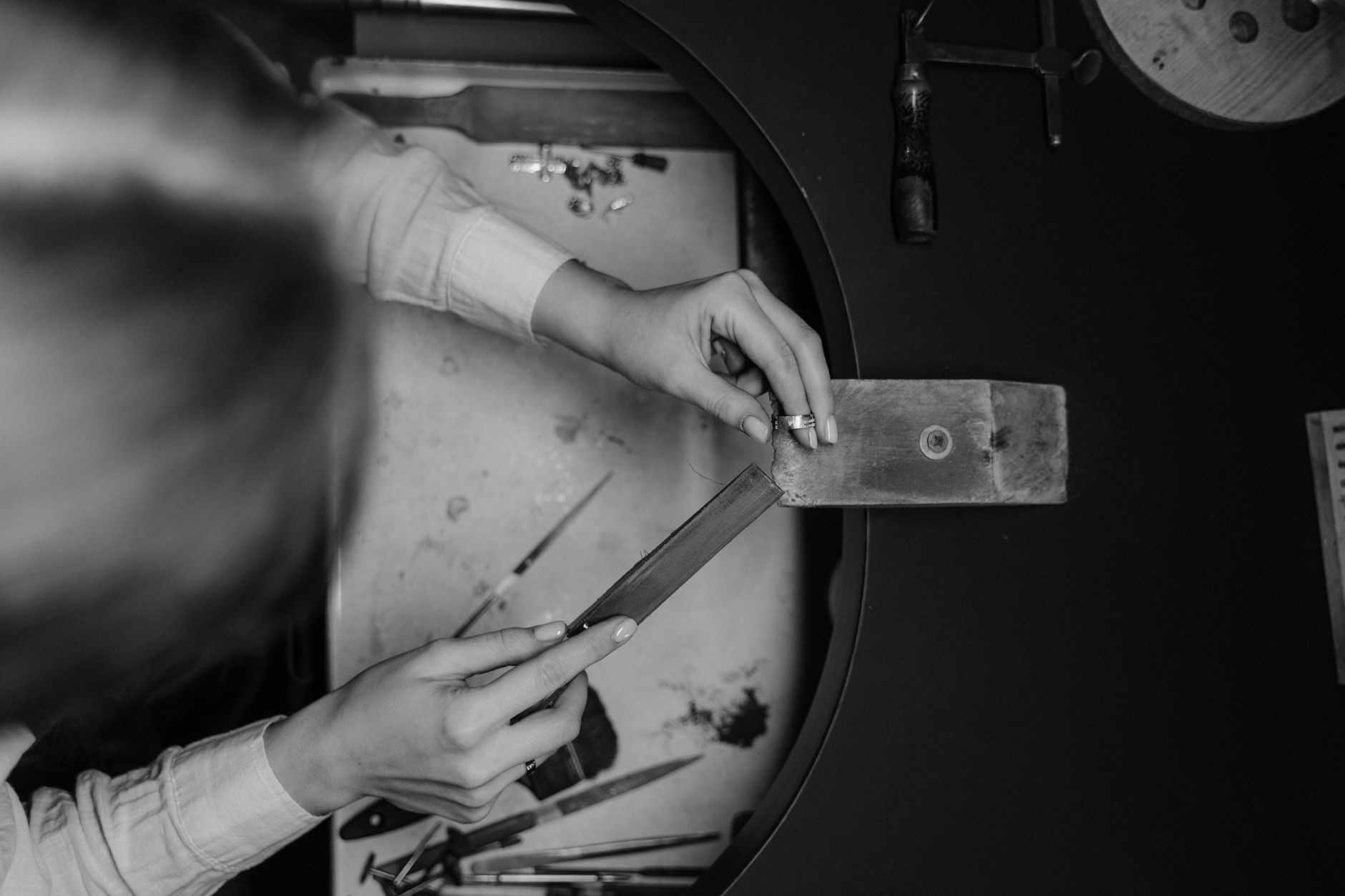
Choose a local bench jeweler by verifying who performs the work, relevant training, equipment, written fees, and safeguards for your jewelry. A bench jeweler is the craftsperson who repairs, sizes, sets, fabricates, and finishes jewelry—not simply the retailer accepting it. For valuable, antique, or sentimental pieces, proximity matters less than proven experience with the specific metal, stones, and construction. A capable shop should explain its process, disclose outsourced work, and document the item before taking custody.
Table of Contents
- Credentials That Show Relevant Skill
- Equipment Should Match the Repair
- What Should the Estimate Include?
- Questions to Ask Before Leaving the Piece
- Protect the Jewelry at Intake and Pickup
Credentials That Show Relevant Skill
No single credential guarantees excellent work. Look for a combination of formal bench-jewelry training, recognized certification, continuing education, and experience with repairs similar to yours. Gemology education helps a jeweler identify stones and treatments that affect repair methods. It does not, by itself, demonstrate skill in stone setting, soldering, laser welding, engraving, or restoration.
Likewise, trade-association membership shows industry involvement but is not proof of bench competence. Ask to see examples involving the same material and problem. Platinum sizing, hollow-chain repair, antique restoration, and replacing an invisible-set stone require different skills. References or detailed before-and-after photographs are more useful when they show close views of the actual workmanship.
Equipment Should Match the Repair
A well-equipped bench commonly has magnification, precision measuring tools, soldering or welding equipment, polishing systems, and effective dust collection. Secure stone storage and adequate lighting also matter. The shop does not need every machine if it openly uses a qualified specialist. Laser welders allow precise work with a smaller heat-affected area than a traditional torch.
That can help near heat-sensitive stones or intricate settings, but it does not make every repair safe. Pearls, opals, emeralds, treated stones, and assembled gems may require removal or special handling. Metal-testing tools can help distinguish alloys and detect plating. However, a surface reading may not reveal the composition beneath thick plating, solder, or previous repairs. Ask how the jeweler will confirm an unfamiliar metal before cutting or heating it.
What Should the Estimate Include?
Repair fees depend on labor, metal, stone requirements, design complexity, finishing, and risk. A simple-looking job can become expensive when the piece has thin walls, old solder joints, fragile stones, or earlier repairs that must be corrected.
Request a written estimate that separates the proposed work from optional improvements. It should address: Clarify whether inspection or diagnostic fees apply if you decline the repair. Also ask whether the estimate is fixed or subject to revision after stones are removed or concealed areas are opened.
- Labor and replacement materials
- New stones, matching, and setting charges
- CAD, casting, engraving, plating, or specialty finishing
- Shipping or subcontractor charges
- Rush fees, taxes, deposits, and cancellation terms
Questions to Ask Before Leaving the Piece
Describe how you wear the jewelry and what outcome you want. A repair intended for occasional wear may differ from a structural rebuild for a ring worn daily.
Disclose previous sizing, plating, stone replacement, and repairs when known. Ask the jeweler: Be cautious if a shop will not identify the repairer, document the piece, explain major risks, or provide written terms. An absolute promise that a delicate or previously repaired item carries no risk is also a warning sign.
- Who will perform the work, and will any part leave the premises?
- Have you completed this repair on the same metal and setting style?
- Which stones must be removed, protected, or tested first?
- Could the work alter engraving, patina, hallmarks, weight, or symmetry?
- Is the goal a localized repair or a longer-lasting structural rebuild?
Protect the Jewelry at Intake and Pickup
The intake record should describe the piece, visible damage, metal markings, stone count, and identifying features. For a high-value item, request clear photographs, a mapped diagram of notable inclusions or damage, and a receipt stating the agreed custody terms. An appraisal documents value but does not automatically establish that the shop insures the piece for that amount. Before approving work, ask whether removed stones, replaced components, and precious-metal scrap will be returned.
Some material may be consumed, contaminated, or too small to recover, so the policy should be settled in advance. At pickup, inspect the jewelry under magnification when appropriate. Check that stones are secure, prongs do not snag, clasps operate correctly, sizing seams are finished, and decorative details remain intact. Report a discrepancy before leaving and obtain written care instructions for any plating, adhesive, enamel, pearl, or newly restored surface.