
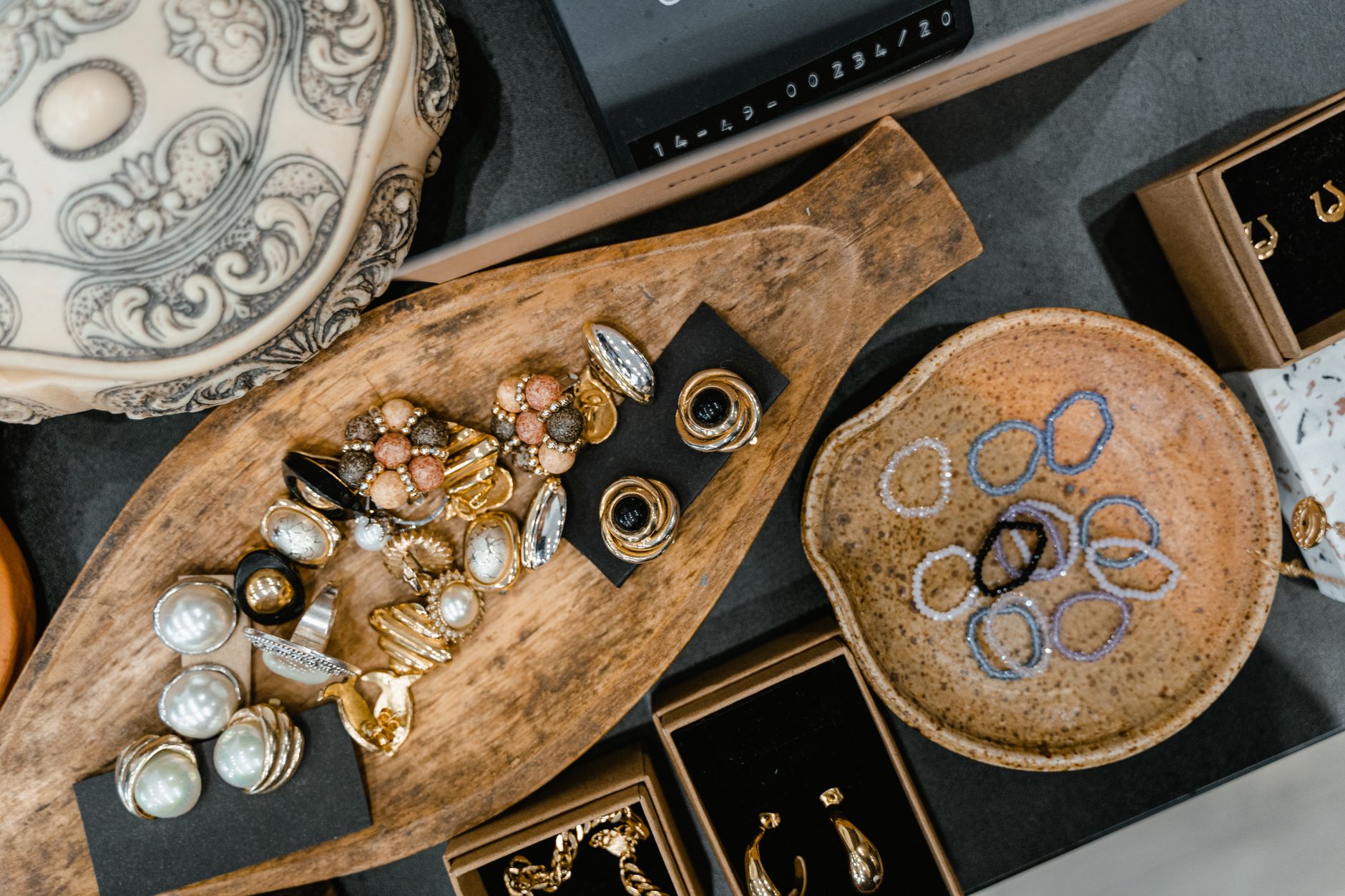
"Tarnish-resistant" means jewelry is designed to discolor more slowly under normal conditions; it does not guarantee that tarnish will never occur. "Tarnish-proof" implies permanent protection, an absolute claim that most metals, platings, and coatings cannot reliably support. How long a piece stays bright depends on its metal, finish, environment, wear, and care. A listing that uses only "tarnish-resistant" provides less useful information than one that identifies the materials and explains the warranty.
Table of Contents
- What tarnish actually is
- Why "resistant" has limits
- Material details matter more than the label
- Conditions that can overwhelm resistance
- What to check before buying
What tarnish actually is
Tarnish is a surface reaction between metal and substances in the surrounding air or environment. It may appear as dullness, yellowing, dark gray areas, or black residue. Sterling silver can darken after reacting with sulfur-containing compounds. Copper and copper-rich alloys may develop brown, black, or green discoloration.
Lower-karat gold may change because its alloy contains reactive metals, even though the gold itself remains comparatively stable. Not every color change is tarnish. Plating can wear through, exposing a differently colored base metal. Cosmetics can leave a film, and copper-containing jewelry may leave green marks on skin without necessarily causing an allergic reaction.
Why "resistant" has limits
"Tarnish-resistant" is a relative description, not a promise of identical performance in every setting. Unless the seller defines the term, it does not specify how long resistance should last or which conditions the claim covers.
Several methods can slow discoloration: Each method has limits. A coating may scratch, plating may wear at high-contact points, and even a stable metal can lose its shine beneath soap, oil, or mineral deposits.
- Using metals that react less readily
- Applying rhodium, gold, or another protective plating
- Adding a clear coating over the surface
- Choosing alloy formulas intended to reduce tarnishing
- Applying a durable surface treatment, such as some physical vapor deposition finishes
Material details matter more than the label
Look for the complete construction of the piece. "Gold-tone" or "silver-tone" describes appearance, while terms such as solid gold, sterling silver, gold-filled, vermeil, plated brass, and plated stainless steel describe materially different products. Solid high-karat gold generally resists tarnish well, but it can scratch and collect residue. Sterling silver commonly tarnishes, although polishing can often restore its surface.
Platinum is highly resistant to tarnish but develops wear and a softer-looking patina over time. Plated jewelry depends on both the base metal and the thickness and quality of the outer layer. Once that layer wears through, polishing may remove more plating instead of improving the piece. Replating may be the appropriate repair.
Conditions that can overwhelm resistance
Moisture, sulfur compounds, salt, chlorine, acids, and repeated abrasion can shorten the life of a finish. Sweat and skin chemistry also vary, so the same piece may discolor faster for one wearer than another. Remove vulnerable jewelry before swimming, bathing, exercising, cleaning, or applying lotions and perfume.
Household cleaners and abrasive polishing products can damage coatings, gemstones, and intentionally oxidized finishes. Storage matters when jewelry is not being worn. Keep pieces dry, separate them to limit scratching, and use a closed container or anti-tarnish storage product when the maker recommends it. Do not seal damp jewelry in an airtight bag.
What to check before buying
A useful listing should name the base metal, any plating or coating, and the seller's care restrictions. If those details are absent, ask before assuming the piece will tolerate water or daily wear.
Check these points: Save the product description and warranty terms from the purchase date. If appearance is central to the purchase, choose a seller whose written policy defines the remedy for premature discoloration rather than relying on "tarnish-resistant" alone.
- Is the piece solid metal, filled, vermeil, plated, or merely described by color?
- Does the seller identify the base metal beneath the finish?
- Are swimming, showering, sweat, perfume, or cleaning products excluded?
- Does the warranty cover tarnish, plating loss, or only manufacturing defects?
- Is repair, recoating, or replating available?