
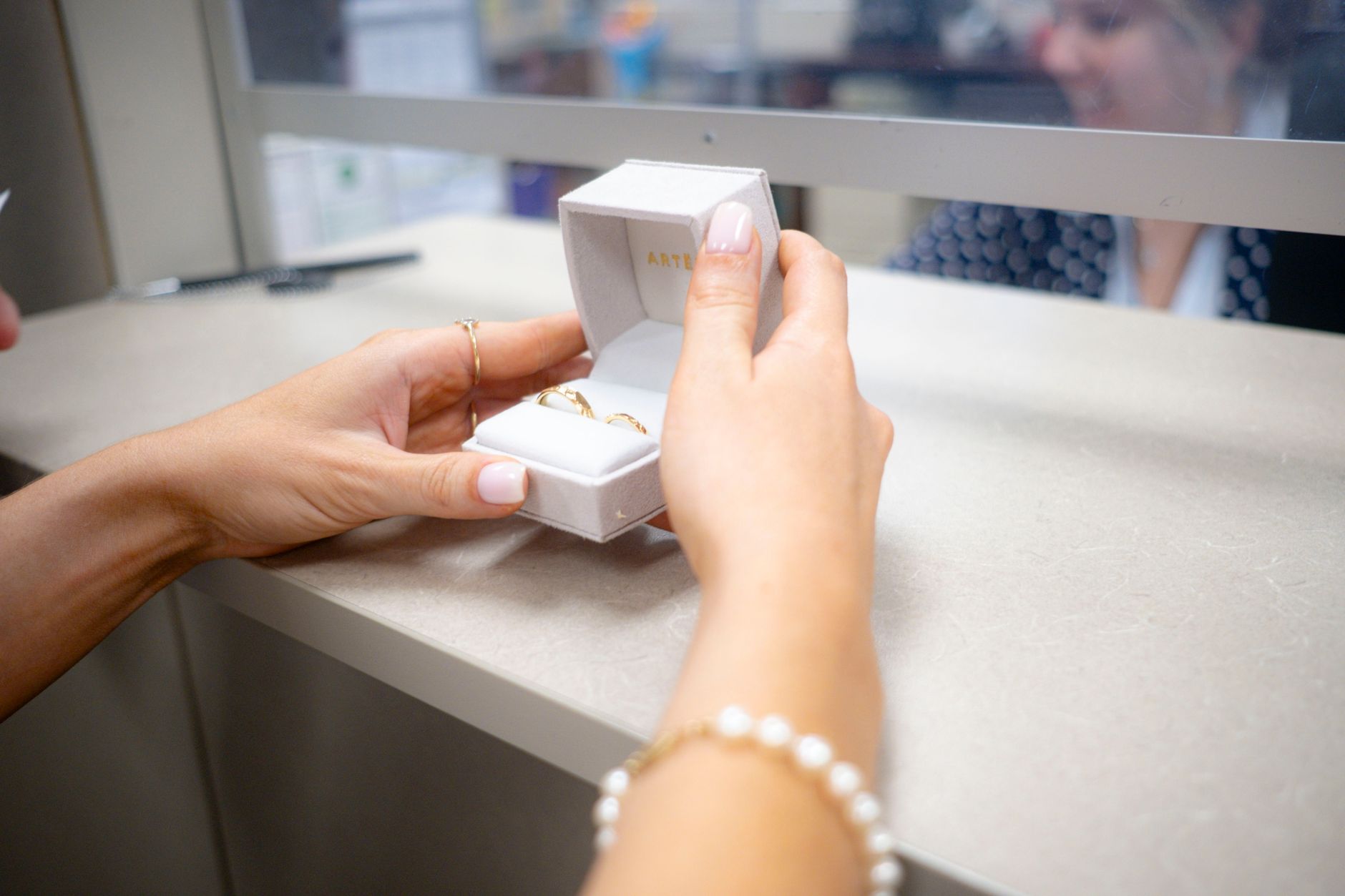
Polish a discolored gold vermeil ring only very lightly and only with a method its maker approves. Aggressive or repeated polishing risks wearing the gold coating, while harsh cleaners may damage the jewelry. Gold vermeil is sterling silver coated on significant surfaces with at least 10-karat gold or gold alloy. Under FTC guidance, the gold layer must be at least 2.5 microns thick to qualify as vermeil.
Table of Contents
- What Does the Discoloration Mean?
- The Safest First Attempt
- Why Polishing Cloths Require Caution
- Cleaners and Habits That Raise the Risk
- When to Stop Polishing
What Does the Discoloration Mean?
Discoloration does not automatically mean the ring is dirty. Mejuri says vermeil can naturally tarnish after exposure to moisture, air pollution, or sulfur-containing items, even when the gold surface remains present in its gold vermeil care guidance. The color change may also indicate wear.
The FTC explains that gold plating eventually wears away, with its lifespan affected by plating thickness and how the jewelry is worn in its jewelry-buying guidance. These possibilities matter because polishing can address surface tarnish but cannot restore missing gold. If the coating has worn thin, additional abrasion may make the exposed area more noticeable.
The Safest First Attempt
Start with the least aggressive method. Use a clean, dry, soft, non-abrasive, lint-free cloth unless the ring's manufacturer provides different instructions.
Do not assume every product labeled "polishing cloth" is suitable. Some contain cleaners or polishing agents, and Missoma specifically advises against treated cloths in its gold-jewelry cleaning guidance.
- Wipe a small, inconspicuous area first.
- Apply very light pressure.
- Use a few controlled strokes rather than prolonged rubbing.
- Check the surface before continuing.
- Stop if the finish changes or the underlying silver becomes more visible.
Why Polishing Cloths Require Caution
brand instructions are not uniform. Mejuri allows a polishing cloth for discolored vermeil but warns that these cloths can be abrasive, so owners should use gentle pressure and avoid over-polishing. Monica Vinader recommends its own clean, dry polishing cloth, rubbed in one direction, for its vermeil.
That advice applies to its products and should not be treated as a universal instruction for every ring. The practical distinction is between a plain wiping cloth and a cloth designed to remove tarnish through abrasion or chemical treatment. When the cloth's contents are unclear, a plain, untreated, non-abrasive cloth is the more cautious choice.
Cleaners and Habits That Raise the Risk
Avoid dip polishes and abrasive jewelry cleaners. Missoma warns that their harsh chemicals can damage jewelry over time in its vermeil care information. Monica Vinader also says not to use silver cleaner on yellow or rose gold vermeil.
Limit the exposures that can accelerate another color change. Moisture, sweat, and chemicals can affect the gold layer, so remove the ring before swimming, showering, or exercising. If the ring gets wet, dry it gently. Store it only after it is dry, and do not respond to persistent discoloration with increasingly forceful polishing.
When to Stop Polishing
Stop after a brief, gentle attempt if the discoloration does not improve. Continued rubbing adds risk without establishing whether the problem is tarnish or worn plating.
Check the ring maker's care instructions before trying another cloth or cleaner. Product-specific guidance should control because manufacturers recommend different methods for their own vermeil finishes. If no approved method is available, leave the surface unchanged rather than experimenting with silver cleaner, dip polish, treated cloths, or abrasive compounds.