

Styling jeans the right way means matching the right cut, wash, and fit to your occasion and body type, then anchoring the look with intentional accessories that elevate rather than compete. Too many people treat jeans as a casual default, pairing them with whatever’s clean and reaching for statement pieces that fight for attention. Instead, well-styled jeans work as a foundation that lets your best pieces—whether that’s a quality watch, heirloom pendant, or fine ring collection—become the focal point. When you own a piece of jewelry worth investing in, the jeans you pair it with should enhance that investment, not undermine it.
The most common mistake is assuming that jeans have to read as casual. A perfectly fitted pair in a dark, polished wash paired with a tailored blazer and understated jewelry reads entirely different from the same jeans worn with a graphic tee. The cut of the denim, the color depth, and how it fits your specific frame matter far more than the brand or price tag. A vintage or well-maintained pair of raw denim, for instance, develops character and patina over time—much like jewelry does—and becomes more distinctive the longer you wear it.
Table of Contents
- Choosing the Right Denim Cut for Your Body Type
- Understanding Wash and Denim Color for Luxury Styling
- The Fit and Length Matter More Than You Think
- Styling Jeans Up or Down Depending on Context
- Common Styling Mistakes That Undermine Jewelry
- Working with Different Jewelry Metals and Colors
- Future-Proofing Your Denim Investment
- Conclusion
Choosing the Right Denim Cut for Your Body Type
Denim cuts range from skinny to straight to wide-leg, and the wrong cut can make you look shapeless or disproportionate, which immediately undermines even the finest jewelry. A tapered or straight-leg cut works for most body types and provides a clean silhouette that doesn’t distract from accessories at your wrist, neck, or hands. If you have a smaller frame, an oversized or wide-leg cut will overwhelm you; if you’re taller or have a larger frame, a cropped or ankle-cut style might actually shorten your proportions. The goal is to create a balanced visual line from your shoulders to your feet.
Consider how different cuts interact with jewelry. Skinny jeans, for example, draw the eye down and emphasize your ankles, which can work beautifully if you’re showing off an ankle bracelet or wearing statement shoes. Straight-leg or boyfriend-cut jeans create a neutral canvas that doesn’t compete with jewelry at your wrists or neck—they simply don’t draw attention there. Wide-leg trousers masquerading as jeans create an elongated silhouette that works best when you have vertical jewelry (long pendant necklaces, dangling earrings) rather than horizontal pieces like wide bracelets.

Understanding Wash and Denim Color for Luxury Styling
The wash and color of your denim set the tone for the entire outfit and directly affect how other colors and metals read against your skin. A dark indigo or black denim is versatile and reads as more polished than a light or heavily distressed wash; it also provides neutral background that allows gold, silver, or rose gold to pop without color competition. A medium or light wash is more casual by nature and works best when you’re deliberately leaning into a relaxed aesthetic, though it can also work in high-low combinations—light jeans with structured jewelry and formal pieces. One critical limitation of very light or heavily bleached denim is that it can wash out certain skin tones, making jewelry appear dull by association.
If you have fair skin, a very light wash can sometimes work; if you have deeper skin tones, the same light wash might actually diminish the visual impact of your jewelry. Similarly, heavily distressed or ripped jeans—especially distressing around the thighs or hips—creates visual chaos that fights against jewelry. The rips direct attention downward when you want eyes on your necklace or rings. Stick to minimal distressing (perhaps just at the hems) if you’re styling jeans with meaningful jewelry.
The Fit and Length Matter More Than You Think
A proper fit means the jeans sit at your natural waist, the thighs aren’t bunching, and the inseam reaches your ankle or shoe without stacking or dragging. Many people either wear jeans too tight (which creates unflattering bunching and makes you unconsciously hunch, bad for showing off necklaces) or too loose (which creates an unintentionally sloppy look). The right fit should allow you to move comfortably and sit without the waistband digging in. Length is equally important: jeans that are too short will expose too much ankle and can make you look shorter; jeans that stack or puddle on your shoes look unfinished.
When you’re wearing investment jewelry—particularly statement rings or cocktail watches—you want your jeans to create a clean visual line from hip to ankle. Stacking or bunching at the hem creates visual clutter that distracts from hand jewelry. Similarly, if you’re wearing a substantial necklace or chandelier earrings, you want your jeans fit to be structured enough at the hips and torso that you’re not unconsciously tugging or adjusting. A well-fitted pair might cost more upfront, but it will work across more outfits and allow your jewelry to be the star of the show.

Styling Jeans Up or Down Depending on Context
The same pair of jeans can be styled in completely different ways depending on what you pair them with. Wear them with a crisp white shirt, a structured blazer, and delicate gold jewelry, and suddenly those jeans work for a business casual environment or an upscale brunch. Swap the blazer for a sweater, add a leather belt and chunky gold rings, and the same jeans work for a dinner date. Change the shoes from heels to flats and swap jewelry for something more understated, and they’re suddenly appropriate for errands or casual weekend wear.
The tradeoff to understand is that the more casual the rest of your outfit, the more you can get away with a more casual denim wash or distressing. Conversely, the more formal or elevated your jewelry and accessories, the more you need your jeans to be polished and well-fitted. If you’re wearing chandelier earrings and a silk blouse, wearing heavily ripped or faded jeans will look confused rather than intentional—you’ve mixed signals. If you’re wearing jeans to a casual weekend gathering, you don’t need dark, pristine denim, but you do need them to fit well and not require constant adjustment.
Common Styling Mistakes That Undermine Jewelry
One frequent mistake is layering too much visual texture. Heavily patterned or distressed jeans combined with a busy top, a patterned accessory, and statement jewelry creates visual static. Your eye doesn’t know where to focus. If your jeans already have character—a distinctive wash, strategic distressing, or an unusual cut—keep your jewelry and other accessories minimal. Conversely, plain, solid-colored jeans can handle bolder jewelry without looking overdone. Another mistake is wearing jewelry that’s too small or delicate to stand up to the informality of denim; a thin chain necklace disappears against denim, while a more substantial piece anchors the entire look.
A warning about distressed denim specifically: while small, tasteful rips can work, heavily distressed jeans will date quickly and already read as quite casual. If you’re investing in quality jewelry, you want your styling to have longevity. Distressed jeans from 2015 look dated now; a well-fitted dark pair will never look out of place. Additionally, very tight or very oversized jeans can distort how jewelry sits. Tight jeans will cause you to unconsciously pull inward, rounding your shoulders and making you hide necklaces. Oversized jeans create bulk that can hide your frame entirely, making even substantial jewelry look small and lost.
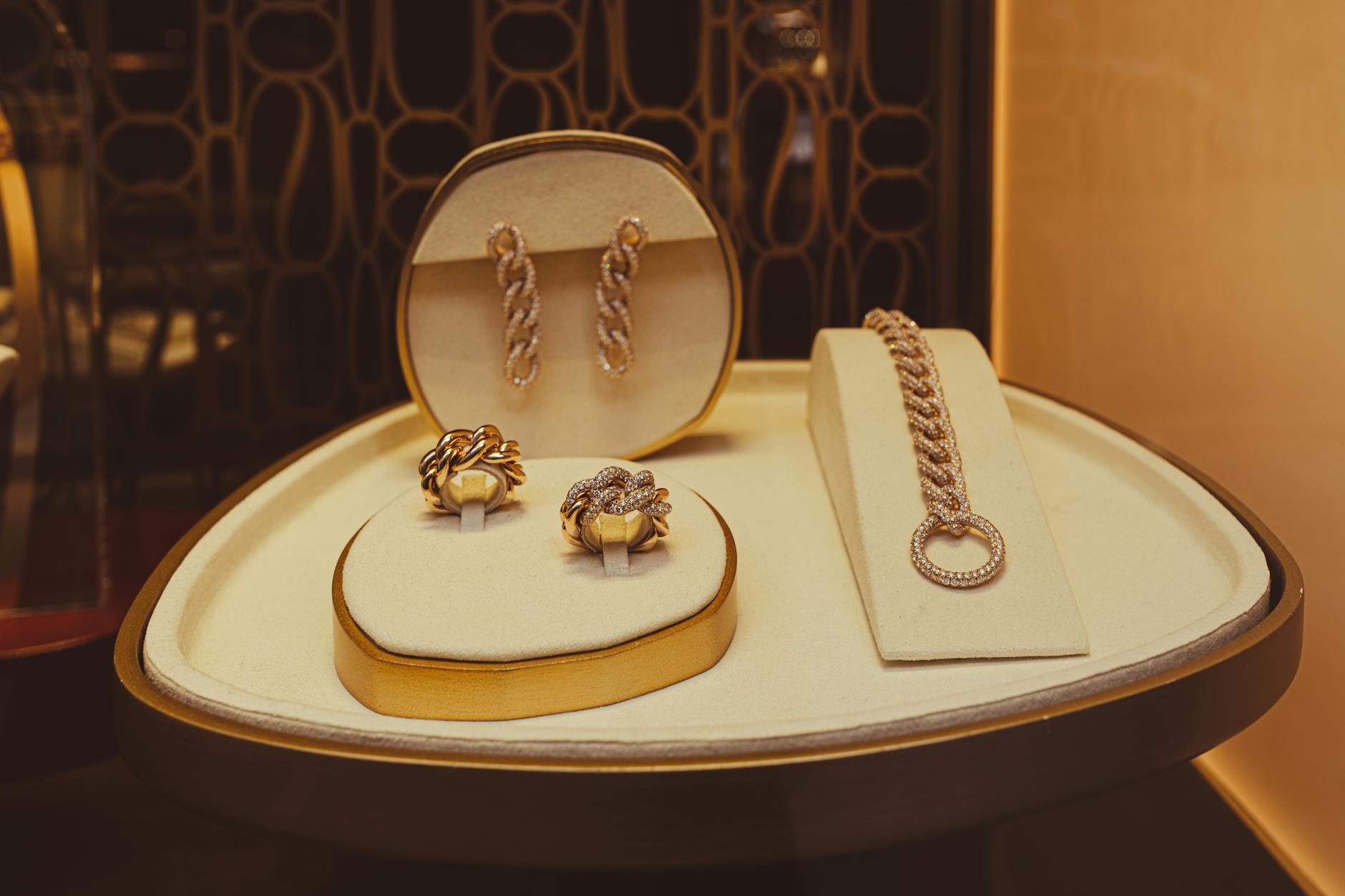
Working with Different Jewelry Metals and Colors
Gold jewelry pairs beautifully with warm-toned washes or classic dark denim. If you have a collection of yellow gold pieces, an indigo or warm-black denim will make that gold glow. Silver and white metals work across all denim washes but especially pop against dark denim. Rose gold is more versatile than either and works well across the spectrum, though it particularly shines when your denim has warmth to it.
If you’re wearing a multi-metal piece or collection (which is increasingly common in modern jewelry styling), a neutral denim color—either dark indigo or black—is your safest choice. Consider also the visual weight of your jewelry against your denim. A delicate gold bracelet might disappear next to oversized denim, while a chunky statement ring will anchor even a loose, relaxed pair. When styling, ask yourself whether your jewelry needs a structured frame (fitted jeans) or whether it’s substantial enough to work against a looser silhouette. A vintage or heirloom piece often deserves a polished denim foundation so it’s properly showcased.
Future-Proofing Your Denim Investment
The timeless approach to jeans styling is choosing cuts and washes that won’t date. Dark denim—whether indigo, black, or deep navy—will remain appropriate for decades. Classic cuts like straight-leg or a slight taper are less trendy than skinny jeans were ten years ago, but they’ve also remained largely consistent in acceptability.
Just as you choose jewelry for longevity, choose denim in versatile colors and cuts that will work with your jewelry collection for years to come. As sustainability and investment pieces become more important in fashion, buying fewer, better pairs of jeans makes sense. A well-made pair in a timeless cut will pair with more of your jewelry across more occasions than fast-fashion denim that falls apart after a season. When you’re styling jeans with pieces you care about—jewelry that holds personal or financial value—the quality of your denim foundation matters.
Conclusion
Styling jeans the right way is about creating a intentional foundation that lets your jewelry and personal style shine. This means choosing a cut that flatters your frame, a wash and color that feels polished enough for your context, and a fit that’s comfortable and clean. It means understanding that jeans are not inherently casual—they’re a neutral canvas that can read anywhere from business casual to relaxed depending on what you pair them with, and how well they fit your body. The final step is building a small collection of well-fitted, well-made jeans in neutral colors and classic cuts.
Rather than constantly chasing trends in denim, invest in two or three pairs that work with your lifestyle and jewelry collection. A dark, polished pair for more elevated occasions. A comfortable, well-fitted pair for everyday wear. Perhaps a vintage or character-rich pair for intentional styling. When your jeans foundation is solid, your jewelry becomes the story rather than fighting for attention.