

Yes, Adidas remains firmly cool in 2025, backed by record-breaking financial performance and a cultural footprint that continues to expand across fashion, music, and sports. The German sportswear giant reported currency-neutral revenue growth of 13% for the second consecutive year, with double-digit gains across every market and channel. When a brand achieves 18.735 billion in revenue during its first nine months while simultaneously dominating street style conversations from Paris Fashion Week to the Oasis reunion tour, the question answers itself. The evidence extends beyond balance sheets.
Walk through any major city and count the Sambas, Gazelles, and Spezials on the feet of people who care about what they wear. The brand’s Q3 2025 revenues hit a record 6.63 billion, while operating profit guidance was upgraded to approximately 2.0 billion for the full year. Perhaps most telling: Adidas announced plans to buy back shares worth up to 1 billion starting February 2026, a move that signals internal confidence in sustained momentum. This article examines the factors sustaining Adidas’s cultural relevance, from its strategic celebrity partnerships to the shifting dynamics with rival Nike. We will explore which silhouettes are rising and falling, how the brand navigates the fine line between hype and oversaturation, and what collectors and consumers should understand about the current state of Three Stripes dominance.
Table of Contents
- What Makes Adidas Cool in 2025 When Other Brands Are Struggling?
- The Samba Situation: Peak Hype or Permanent Classic?
- The Rise of the SL72 and What It Means for Collectors
- Celebrity Partnerships: Strategic or Saturated?
- Stock Performance vs Cultural Performance: A Disconnect
- The Oasis Effect and Cultural Timing
- Looking Ahead: Sustainability of the Current Moment
- Conclusion
What Makes Adidas Cool in 2025 When Other Brands Are Struggling?
The contrast with nike tells most of the story. GlobalData analysis forecasts Adidas to be one of the biggest winners within the global apparel market in 2025, actively taking market share from its American rival. While Adidas sales are projected to grow 13.5% this year, Nike expects a 10% decline in fiscal 2025. In market share terms, Adidas is forecast to grow by 0.1 percentage points to 1.9% of global apparel, while Nike is expected to drop 0.3 percentage points to 2.6%. The divergence stems from product strategy.
Adidas leaned into its archive at precisely the right moment, resurrecting silhouettes that resonated with consumers hungry for authenticity over innovation theater. The brand’s footwear revenue climbed 14% currency-neutral in the first nine months of 2025, with double-digit growth spanning Originals, Sportswear, Running, Training, and Performance Basketball categories. This breadth matters because it indicates health across multiple consumer segments rather than dependence on a single trend. Nike’s struggles have created an opening that Adidas has exploited with surgical precision. While Nike pushed futuristic designs and performance technology, Adidas recognized that coolness in 2025 often means looking backward. The terrace culture aesthetic, rooted in British football supporter fashion from the 1980s, found its perfect vessel in Adidas’s existing catalog.
The Samba Situation: Peak Hype or Permanent Classic?
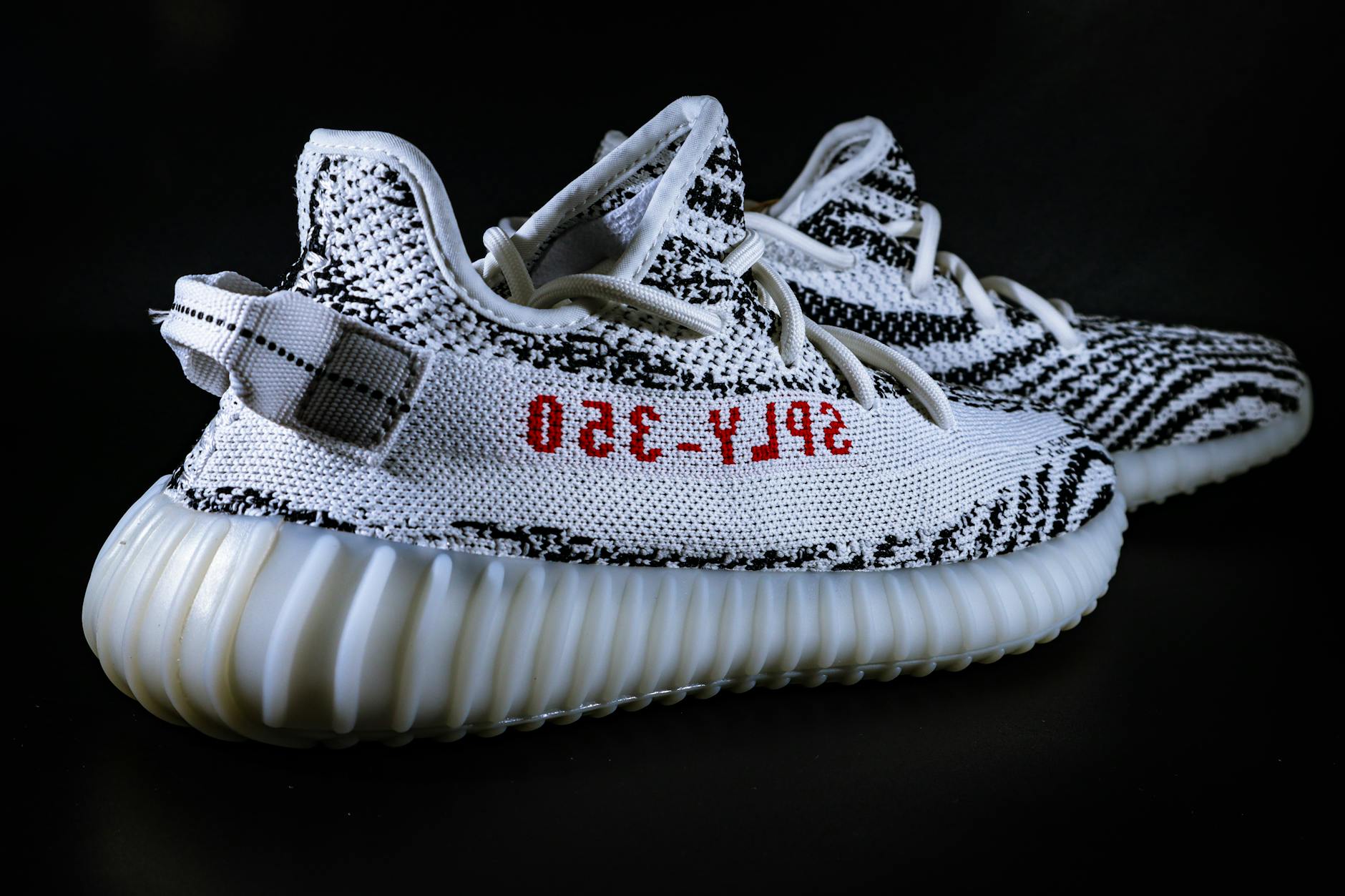
The Adidas Samba deserves specific examination because it represents both the brand’s success and the precariousness of trend-driven fashion. The model’s sell-out rate dropped to 36% in Q1 2025, a notable decline from its previous dominance. This statistic requires nuanced interpretation rather than alarm. A decreasing sell-out rate can indicate two very different scenarios: genuine decline or transition from hype item to wardrobe staple. The Samba appears to be experiencing the latter.
When every retailer stocks a shoe and supply meets demand, sell-out percentages naturally fall even as total sales remain strong. The Samba has moved from the realm of Instagram flex to everyday essential, joining shoes like the Stan Smith and Superstar as permanent fixtures rather than seasonal phenomena. However, if your interest in Adidas centers purely on resale value and limited-edition cachet, the Samba may have run its course as a speculation vehicle. The Gazelle and Spezial consistently showed higher search volumes than the Samba throughout 2025, with the Spezial reaching search peaks of 94 in March and November. For those seeking the next wave rather than riding the current one, attention has shifted.
The Rise of the SL72 and What It Means for Collectors
The Adidas SL72 represents the brand’s pipeline of cultural capital. Originally released for the 1972 Munich Olympics, this retro runner has gained significant traction through strategic influencer endorsements, with figures like Bella Hadid spotted wearing the model. Industry observers suggest the SL72 could outperform the Samba by late 2025. This pattern illuminates how Adidas maintains relevance: by mining its archive for models with genuine heritage, then placing them in the right cultural contexts.
The SL72 possesses the slim profile and vintage aesthetic that photographs well on social media while carrying authentic sports history. Unlike competitors who must manufacture narratives for new designs, Adidas simply needs to remind people what already exists. For collectors and enthusiasts, the SL72 trajectory offers a template. Monitoring which archival silhouettes receive collaborator attention and celebrity placement provides advance notice of emerging trends. The brand’s Paris Fashion Week 2025 presentation unveiled six major collaborations, including partnerships with Grace Wales Bonner and Willy Chavarria, each potentially elevating different models into the cultural conversation.

Celebrity Partnerships: Strategic or Saturated?
Adidas’s 2025 roster demonstrates calculated diversity rather than celebrity collection for its own sake. The multi-year deal with Lamine Yamal, signed following his breakout performance at UEFA Euro 2024, includes a personal logo and dedicated apparel line. This signing captures football’s emerging generation at precisely the moment global attention locked onto Spanish football’s young sensation. The Bad Bunny partnership with Mercedes-AMG F1, which launched the Adiracer GT Silhouette and Motorsport Collection in October 2025, shows different thinking. Rather than signing another athlete, Adidas connected Latin music’s biggest star with Formula 1’s glamour, creating a product line that speaks to audiences who might never watch a football match.
Similarly, Rishabh Pant’s return as brand ambassador following his remarkable cricket comeback story resonates specifically with Indian consumers, the world’s most populous market. The risk in extensive partnership portfolios lies in dilution. When every celebrity wears the brand, exclusivity evaporates. Adidas has thus far navigated this by ensuring each partnership speaks to distinct audiences with minimal overlap. Ousmane Dembélé’s September 2025 campaign featuring bespoke gold-detailed boots targets football purists, while the Bad Bunny collaboration reaches an entirely separate demographic. Whether this balance holds as partnerships multiply remains an open question.
Stock Performance vs Cultural Performance: A Disconnect
Investors and fashion observers are looking at different metrics, which explains a curious disconnect. Adidas stock sits down approximately 11% year-to-date in 2025, hardly the profile of a brand at peak cultural relevance. Nike fares slightly worse at negative 11.5% for the year and down 45.3% over five years, but neither stock chart suggests dominance. The explanation lies in how financial markets evaluate consumer goods companies versus how cultural relevance actually functions. Margins, currency fluctuations, supply chain costs, and macroeconomic conditions affect stock prices independently of whether the products are desirable.
Adidas’s Q1 2025 operating margin improved to 9.9% from 6.2% in 2024, with operating profit surging 82% to 610 million. These are strong numbers, yet the stock reflects broader market conditions and sector-wide pressures. For consumers rather than investors, the financial health matters primarily as a sustainability indicator. A brand with improving margins and upgraded guidance can invest in design, collaborations, and quality without cutting corners. The analyst consensus rating of Zacks Rank #3 (Hold) for Adidas versus Nike’s Zacks Rank #5 (Strong Sell) suggests professional observers see more fundamental health in Adidas’s business model, even if neither stock is generating enthusiasm.
The Oasis Effect and Cultural Timing
The Oasis reunion tour in 2025 provided an unexpected tailwind for Adidas, reigniting interest in 90s-inspired sneakers including Sambas and Gazelles. This demonstrates something important about how brands maintain cultural relevance: sometimes external factors align with existing positioning in ways that cannot be planned but can be exploited.
Terrace culture, Britpop, and Adidas share deep historical connections. When the Gallagher brothers announced their return, millions of consumers reconnected with an aesthetic that Adidas had already been nurturing. The brand did not create the Oasis reunion, but decades of authentic association with that cultural moment meant automatic relevance when nostalgia surged.
Looking Ahead: Sustainability of the Current Moment
Adidas faces the challenge every successful brand eventually confronts: maintaining momentum without becoming ubiquitous to the point of irrelevance. The Samba’s trajectory from coveted item to common sight illustrates the lifecycle. The brand’s response, elevating the Gazelle, Spezial, and SL72 while the Samba transitions to classic status, suggests awareness of this dynamic.
The 1 billion share buyback announced for February 2026 indicates management believes current success has staying power. Whether consumers in late 2025 and beyond continue agreeing depends on execution: the right collaborations, appropriate scarcity on limited models, and continued investment in the archive mining that has proven so effective. The cultural capital exists; the question is stewardship.
Conclusion
Adidas enters late 2025 in a position of genuine strength, combining financial performance that would be the envy of most consumer brands with cultural relevance that money cannot simply purchase. Record revenues, expanding margins, market share gains against Nike, and a pipeline of heritage silhouettes ready for their moment all point toward sustained momentum. The Samba may have crested as a hype item, but the Gazelle, Spezial, and SL72 ensure the conversation continues.
The brand’s coolness rests on authentic foundation rather than manufactured trends. Decades of football culture connection, strategic celebrity partnerships across global markets, and an archive deep enough to fuel years of revivals provide durable advantages. For consumers, collectors, and observers of fashion markets, Adidas in 2025 demonstrates that heritage brands can dominate contemporary culture when they understand their own history and deploy it with discipline.